The Ancient Story

3,000 Years of Spice Heritage
from Sri Lanka

Long before the word "export" existed, the intoxicating fragrance of Sri Lankan spices drifted across the Indian Ocean, drawing merchants from Arabia, Persia, China, and Rome to this emerald island. Sri Lanka — known through history as Taprobane to the Greeks, Serendib to the Arabs, and Ceilão to the Portuguese — has always been the world's most coveted spice island.

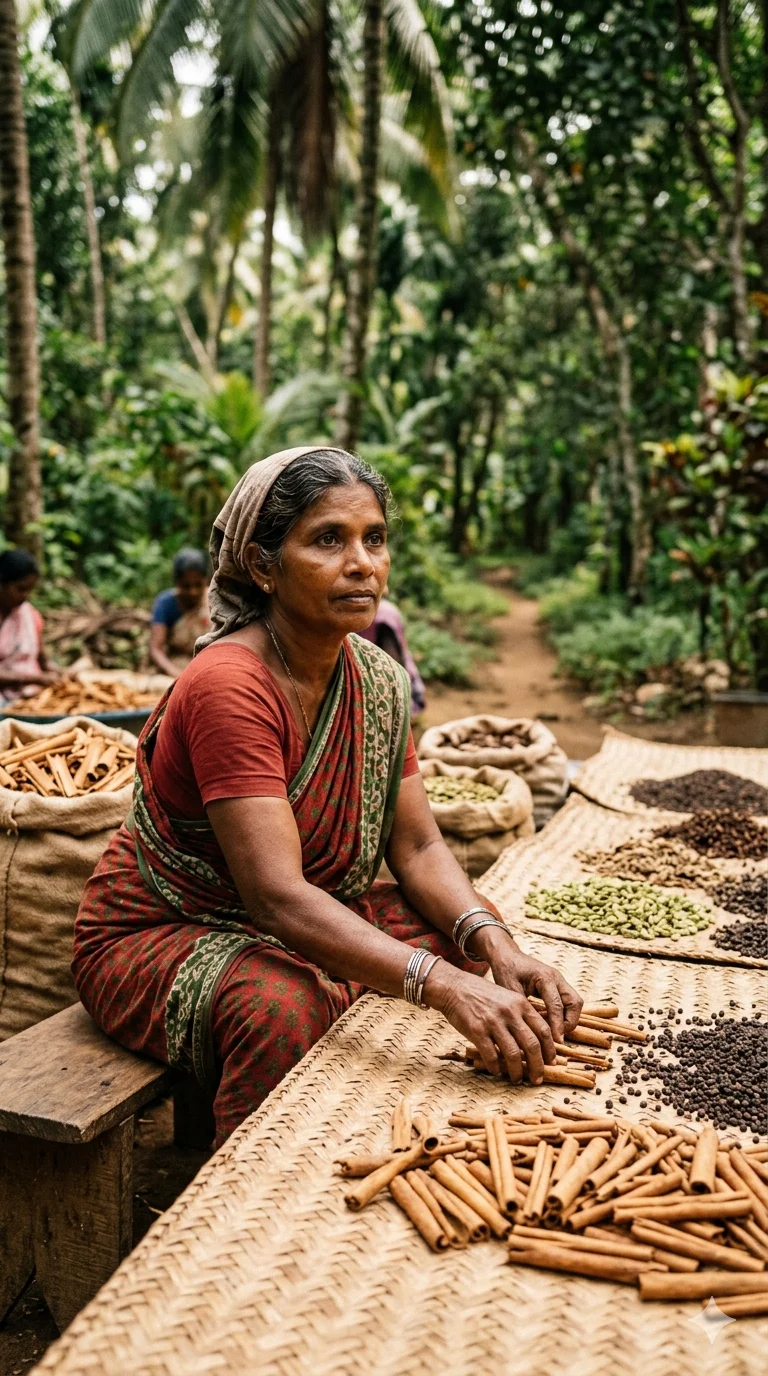
Ancient spice trade in Sri Lanka
3,000+ Years of Spice Trade Legacy

The ancient chronicles of Sri Lanka — the Mahavamsa — record spice cultivation as far back as 300 BCE. Arab traders called the island "Serendib," the very root of the English word "serendipity," because stumbling upon Sri Lanka felt like a miraculous stroke of fortune. They came for one thing above all: the unparalleled spices that grew only on this tropical paradise.

circa 1000 BCE
Phoenician and Arab merchants first document Ceylon cinnamon trade — the world's most valuable spice of antiquity.
circa 300 BCE – 200 CE
Sri Lanka becomes a thriving port city civilization, trading spices with Rome, Greece, Egypt, and Persia via the Maritime Silk Route.
7th–15th Century CE
Arab traders monopolize Ceylon spice export. Ibn Battuta and Marco Polo both marvel at Sri Lanka's unrivalled abundance of spices and natural wealth.
1505 – 1948
Portuguese, Dutch, and British colonial powers occupy Sri Lanka specifically to control the global Ceylon cinnamon and spice trade — the most profitable commodities on Earth.
Today
Sri Lanka remains the world's top exporter of true Ceylon cinnamon (Cinnamomum verum) and a premier source of premium quality spices for global buyers.
"Pearl of the Indian Ocean"
The Pearl of the Indian Ocean
"Nature has placed Sri Lanka at the centre of the seas like a jewel — an island so abundant in spices, gems, and wealth that the world has always sought it."

Sri Lanka earned its legendary epithet "Pearl of the Indian Ocean" not merely from its teardrop shape resembling a pearl on maps, but from its extraordinary natural wealth. The island sits at the geographical crossroads of the Indian Ocean, making it nature's perfect spice garden — blessed with a tropical monsoon climate, rich highland soils, and year-round warmth that produces spices of unmatched potency and fragrance.

01
Equatorial Climate Perfection

Sri Lanka lies between 6°N and 10°N latitude — the ideal tropical zone for growing the world's finest spices with optimal essential oil content.

02
Diverse Agro-Climatic Zones

From highland rainforests above 2,000m to coastal lowlands, Sri Lanka's varied microclimates allow cultivation of over 25 varieties of premium spices.

03
Ancient Cultivation Wisdom

Generations of Sri Lankan farming families have perfected traditional spice cultivation methods passed down for over 3,000 years — ensuring quality no industrial method can replicate.

04
World's #1 Ceylon Cinnamon Source

Sri Lanka produces over 90% of the world's true Ceylon cinnamon (Cinnamomum verum) — the authentic, superior cinnamon prized by chefs, pharmacists, and health experts worldwide.

The Maritime Silk Route

Sri Lanka: The Ancient Hub
of Global Trade

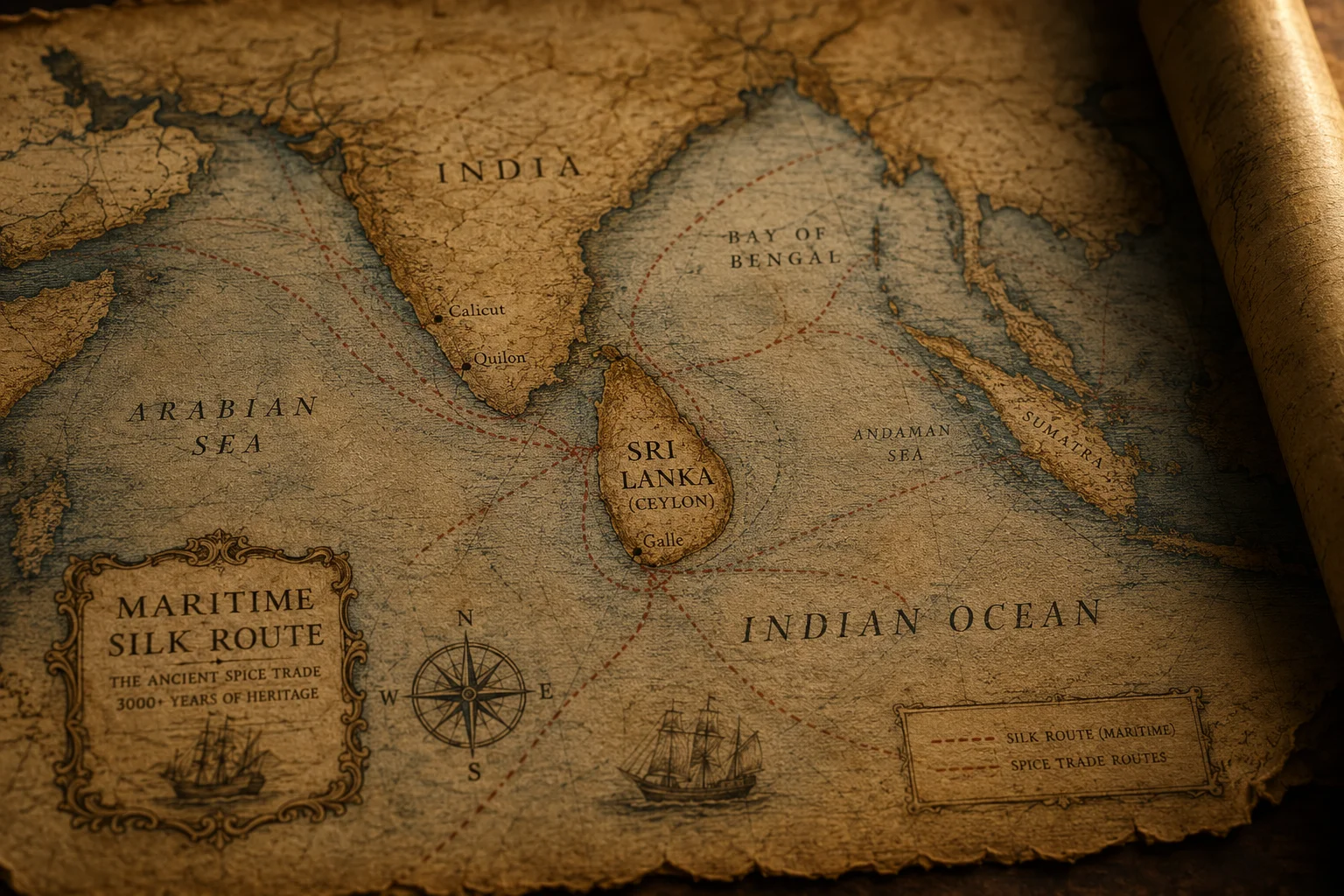
Ancient Maritime Silk Route map showing Sri Lanka as central hub

For over three millennia, Sri Lanka stood at the epicentre of the world's most important trade network — the Maritime Silk Route. Long before European powers understood global trade, Arab, Chinese, Indian, and Persian merchants navigated the Indian Ocean to reach this island's legendary spice gardens.

The island's geographical position — at the junction of the East-West sea lanes connecting the Arabian Sea to the Bay of Bengal — made Colombo's ancient port of Galle one of the busiest trading hubs in the ancient world. Ships laden with Chinese silk, Roman gold, and Arabian frankincense would dock here and depart with cinnamon, pepper, cardamom, and other priceless Ceylon spices.

This ancient trade advantage holds true today. Modern Sri Lanka, served by Colombo Port — South Asia's largest transshipment hub — enjoys direct shipping connections to over 150 countries, making Sri Lankan spice export faster, more reliable, and more cost-effective than any landlocked competitor.

anchor
Colombo Port

South Asia's largest transshipment port with direct connections to 150+ countries.

public
Strategic Location

Equidistant between Europe, Middle East, and East Asia — ideal for global distribution.

directions_boat
Modern Logistics

Cold-chain, bulk, and container shipping options with competitive freight rates.

description
Trade Agreements

GSP+ and bilateral trade preferences with EU, UK, USA, India and more.

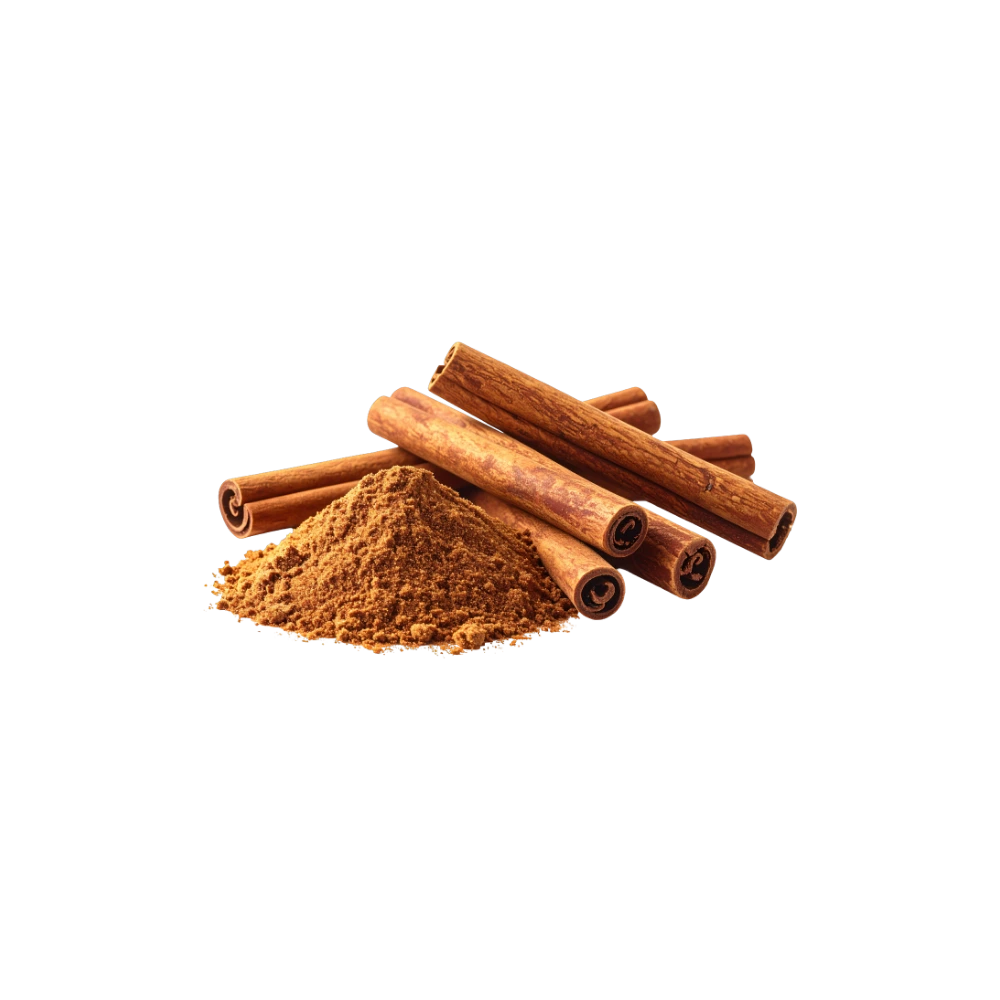
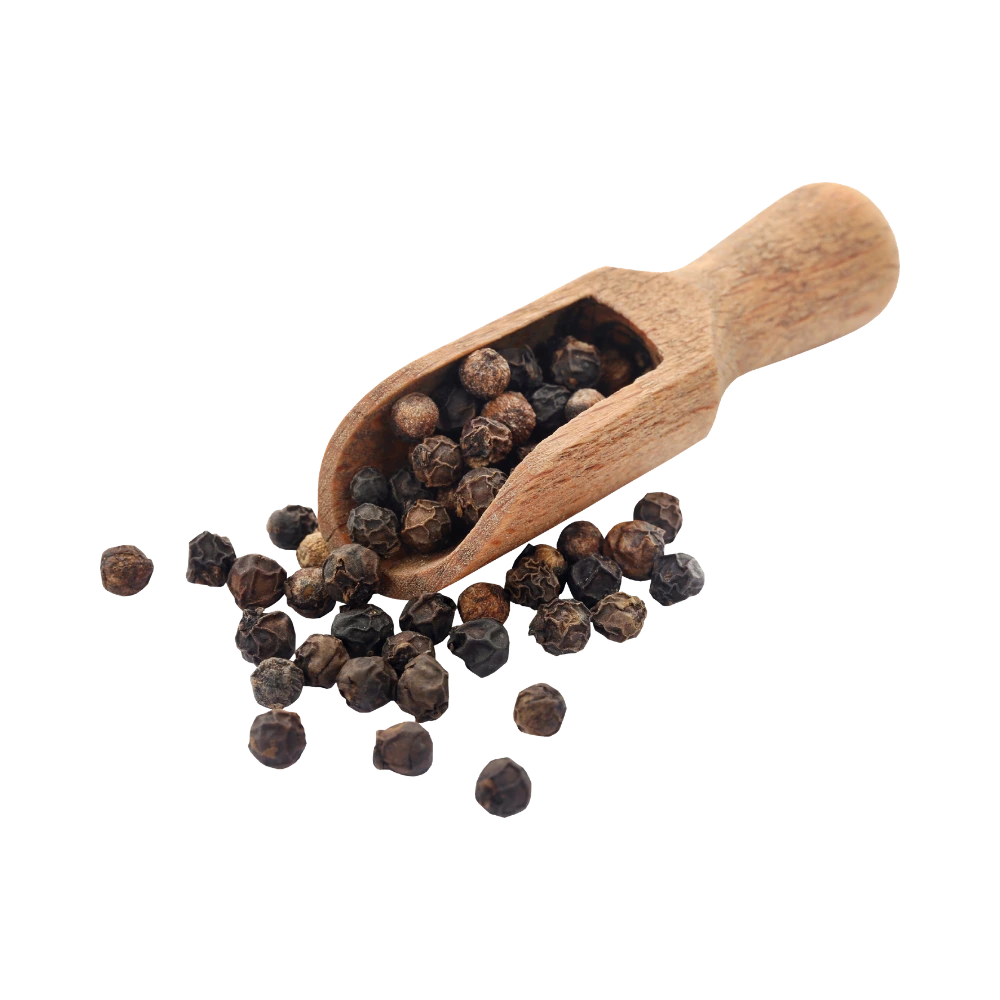
Cinnamon Pepper
Our Ceylon Spices

Premium Sri Lankan Spices
for Global Import

Every Ceylon spice we export is sourced from its traditional growing region in Sri Lanka, processed under strict quality control, and certified to international food safety standards. When you import Sri Lankan spices, you receive the authentic product that has commanded premium prices on global markets for centuries.

eco

Ceylon Cinnamon

Cinnamomum verum · True Cinnamon

The crown jewel of Sri Lankan spices. Delicate, sweet, and complex — impossible to replicate outside Sri Lanka. Used in gourmet cooking, health supplements, and premium cosmetics. Sri Lanka supplies 90%+ of global true cinnamon.

grain

Black Pepper

Ceylon Black Pepper · The King of Spices

Grown in Sri Lanka's Kandy and Matale districts, Ceylon black pepper is renowned for its bold, pungent heat and complex flavour profile. Available in whole, cracked, ground and oil forms.

spa

Ceylon Cardamom

Elettaria cardamomum · Green Cardamom

Sri Lanka's highland cardamom carries a refreshing floral-citrus aroma highly prized by Middle Eastern, European, and Indian buyers for teas, sweets, and cuisine.

local_florist

Cloves

Syzygium aromaticum · Ceylon Cloves

Sri Lanka's cloves are rich in eugenol, making them premium-grade for food processing, dental products, and pharmaceutical applications. Available whole and as clove oil.

circle

Turmeric

Curcuma longa · Ceylon Turmeric

High-curcumin Sri Lankan turmeric is booming in global health markets. Vibrant in colour, potent in medicinal properties, and organically grown across the island's fertile plains.

diamond

Nutmeg & Mace

Myristica fragrans · Ceylon Nutmeg

The kernel (nutmeg) and crimson lace (mace) of the same fruit — Sri Lanka produces both with exceptional oil content, prized in European and American gourmet and fragrance markets.

bubble_chart

White Pepper

Piper nigrum · White Grade

Sun-dried and processed to perfection, Ceylon white pepper is the preferred choice for light-coloured sauces, European fine dining, and premium seasoning blends.

water_drop

Ceylon Ginger

Zingiber officinale · Fresh & Dried

Fiery, aromatic, and with higher gingerol content than commodity ginger — Sri Lankan ginger is sought by the health food, beverage, and nutraceutical industries worldwide.

Beyond Spices

Sri Lanka's Premium
Agricultural Commodities

Sri Lanka's extraordinary agricultural bounty extends far beyond spices. The island exports a diverse range of world-class commodities, each grown in conditions unique to the Pearl of the Indian Ocean.

01
Ceylon Tea

The World's Finest Tea — Ceylon Tea

Sri Lanka is the world's fourth-largest tea producer and the home of iconic Ceylon Tea. Grown in misty highlands like Nuwara Eliya, Dimbula, and Uva at elevations above 1,800m, Ceylon black tea, green tea, and white tea are exported to over 100 countries. The unique altitude, cool temperatures, and low humidity create a cup character impossible to replicate elsewhere. Ceylon Tea is a premium commodity sought by bulk buyers, specialty tea brands, and private label manufacturers globally.

Black Tea Green Tea White Tea Orthodox Grades CTC Grades
02
Coconut Products

Premium Sri Lankan Coconut & Coconut Derivatives

Sri Lanka's coastlines and lowland plains produce exceptional coconuts used to manufacture a wide range of export-grade products. From cold-pressed virgin coconut oil — prized in natural cosmetics and health food markets — to desiccated coconut, coconut cream, coconut milk, coconut water, coconut flour, and coconut shell charcoal. Sri Lankan coconut products meet HACCP, ISO, and organic certification standards and are exported to the USA, EU, Middle East, and Asia.

Virgin Coconut Oil Desiccated Coconut Coconut Cream Coconut Flour Coconut Shell Charcoal
03
Rubber

Natural Rubber from Sri Lanka

Sri Lanka has been a significant natural rubber producer since the colonial era. Sri Lankan natural rubber (Hevea brasiliensis) is exported as ribbed smoked sheets (RSS), technically specified rubber (TSR), latex concentrate, and crepe rubber. The island's humid tropical climate produces high-quality natural rubber with excellent physical properties, serving the global automotive, medical, industrial, and consumer goods sectors.

RSS Grades TSR Grades Latex Concentrate Crepe Rubber
Why Global Importers Choose Us

The Competitive Advantage
of Sri Lankan Spices

Importers across the USA, EU, Middle East, and Asia trust Sri Lankan spices for reasons that go beyond price — it's the unmatched provenance, quality, and supply chain reliability that makes the difference.

emoji_events

Guaranteed Authenticity

Every shipment of Ceylon spices is backed by Sri Lanka's national certification bodies — ensuring you receive genuine, origin-verified product, not an inferior substitute.

eco

Organic & Clean Label

Our partner farms offer USDA Organic, EU Organic, Rainforest Alliance, and Fair Trade certified spices to meet premium market demands for clean label and sustainable sourcing.

science

Food Safety Certified

All exports comply with ISO 22000, HACCP, BRC Global Standards, and FSSC 22000, with full traceability from farm to final export documentation.

inventory_2

Flexible Pack Sizes

From full container loads (FCL) to LCL shipments and retail-ready private label packaging — we accommodate importers of all scales, from boutique brands to multinational food companies.

bolt

Fast, Reliable Shipping

Direct vessel services from Colombo to Rotterdam, Hamburg, New York, Dubai, Singapore and Sydney mean competitive lead times and reliable delivery schedules year-round.

forum

Expert Trade Support

Our export team handles all documentation — phytosanitary certificates, certificates of origin, fumigation certificates, commercial invoices and letter of credit compliance.
Frequently Asked Questions

Common Questions About
Importing Sri Lankan Spices

Sri Lankan spices, particularly Ceylon cinnamon, are uniquely superior due to the island's tropical climate, rich volcanic highland soil, and over 3,000 years of expert cultivation knowledge. Ceylon cinnamon from Sri Lanka is the true cinnamon (Cinnamomum verum), fundamentally different from the inferior cassia variety sold as "cinnamon" elsewhere. It has a delicate, complex sweetness, lower coumarin content (making it safer for regular consumption), and superior essential oil profiles. Sri Lanka's geographic position in the Indian Ocean provides ideal year-round growing conditions that cannot be replicated elsewhere.
Sri Lanka earned the title "Pearl of the Indian Ocean" for multiple reasons. First, its teardrop shape on maps resembles a pearl hanging below India. Second, the island possesses extraordinary natural wealth — the world's finest spices, precious gemstones (Sri Lanka is one of the world's top five gem-producing nations), and exceptional biodiversity. Third, its strategic central location in the Indian Ocean made it the trading jewel of ancient maritime routes, drawing merchants from across the known world to its shores.
Sri Lanka exports a comprehensive range of premium Ceylon spices including: Ceylon cinnamon (sticks, powder, oil), black pepper (whole, cracked, ground), green cardamom, cloves (whole, oil), nutmeg and mace, turmeric (root, powder), ginger (fresh, dried, powder), white pepper, curry leaf, pandan leaf, goraka (Garcinia cambogia), and many more. Beyond spices, Sri Lanka also exports Ceylon tea, virgin coconut oil, desiccated coconut, natural rubber, and tropical fruit products.
Sri Lanka was one of the most strategically important nodes on the ancient Maritime Silk Route — the sea trade corridor that connected East Asia, South Asia, the Arabian Peninsula, East Africa, and Mediterranean Europe. The island's position in the Indian Ocean made it the ideal midpoint stopover for merchant vessels. Arab dhows, Chinese junks, and Roman merchant ships all called at Sri Lanka's ancient port of Galle and the northern harbours. Sri Lankan spices — especially cinnamon and pepper — were among the most valuable commodities traded along these ancient routes for over 3,000 years, often worth more than their weight in gold.
Sri Lankan spice exports are supported by internationally recognized certifications. These include: ISO 9001 (Quality Management), ISO 22000 (Food Safety), HACCP, BRC Global Standard for Food Safety, USDA NOP Organic, EU Organic Certification (EC 834/2007), Rainforest Alliance, Fair Trade, Phytosanitary Certificates issued by the Department of Agriculture Sri Lanka, Certificates of Origin from the Sri Lanka Customs, and FDA compliance documentation for the US market. Specific certifications vary by exporter and product.
Minimum order quantities vary by product and packaging format. Typically, bulk commodity imports start from 1 metric tonne (MT) per product, with full container loads (FCL, 20ft or 40ft) being most cost-effective for large buyers. For smaller specialty importers and gourmet brands, we offer LCL (Less than Container Load) shipments with lower minimums. We also offer private label packaging for retail-ready import. Contact us to discuss your specific volume requirements and we will tailor a solution for your market.